This month
At a workshop recently, someone asked me how much I use AI in my private life. I answered, "Oh, I don't know, not that much... meal planning, and getting a weather report each morning to see if I can pick up my daughter by bike..."
Afterward I thought about it and realized how understated that was. So much of our personal life runs on AI, but it's so seamless I didn't even think about it. Here's the fuller answer:
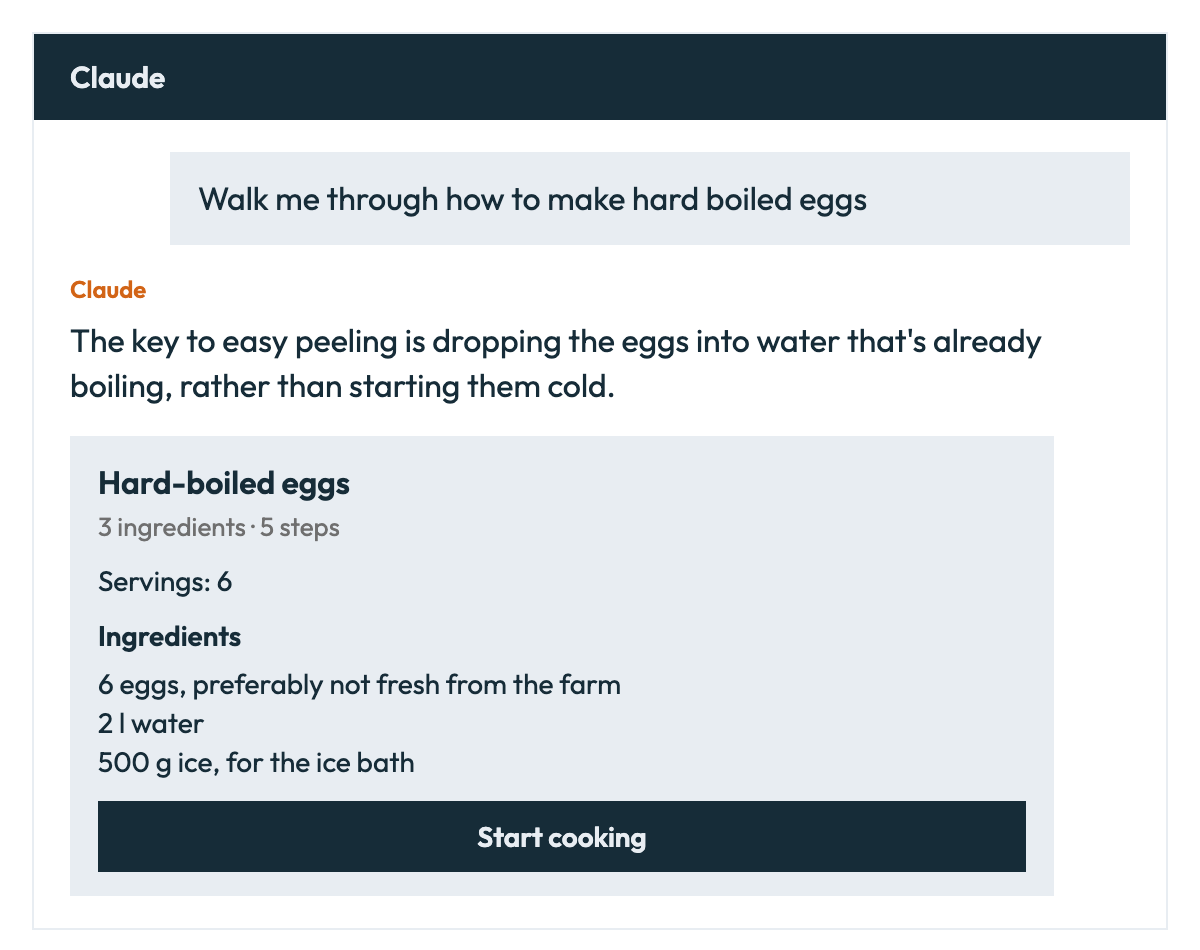
Dinner. I am a very bad and a very reluctant cook (I have asked Claude to walk me through hard-boiling eggs, just so you can get a sense of the level we are talking about here), so this job went first. Our family's AI assistant plans three weeks of dinners from recipes we already like and fills our online grocery cart every week.
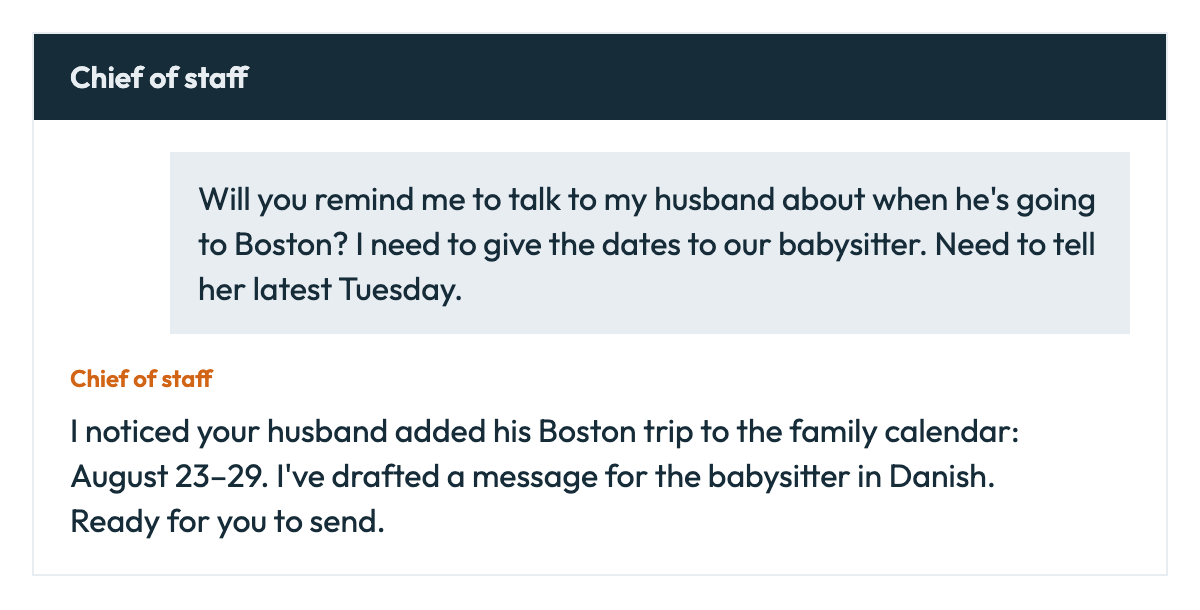
Calendar coordination. I asked my AI chief of staff to remind me to ask my husband when he's going to Boston, so I could tell our babysitter. It noticed the trip in his calendar, so instead of a reminder, my morning brief had the dates and a drafted message to the babysitter. Instead of spending time coordinating our calendars, my husband and I could then focus on the more important things, like debating who the villain in Ted Lasso will be this season (turns out I was right!).
The loose ends. At 6:45 every weekday, my AI chief of staff sends a brief to my phone with today's priorities and anything I promised someone. In the evening, after I've logged off, it closes out the day. And when something occurs to me outside work hours, I text it to my chief of staff and forget about it. It gets handled silently in the background. I can get rid of the clutter in my mind so I can focus on playing 1500 rounds of Sneaky Snacky Squirrel with my daughter (again, the important things in life).
And that's just the beginning. AI also helps us with:
- Household management: the family budget, trips and packing lists, smart lights
- Parenting: a potty training log, milestone tracking
- Learning and skill development: my morning Portuguese lessons, daily quizzes on what I've been reading and learning about
Which of these would you want in your life?
Subscribers vote with one click in the email. Want a vote next time? →
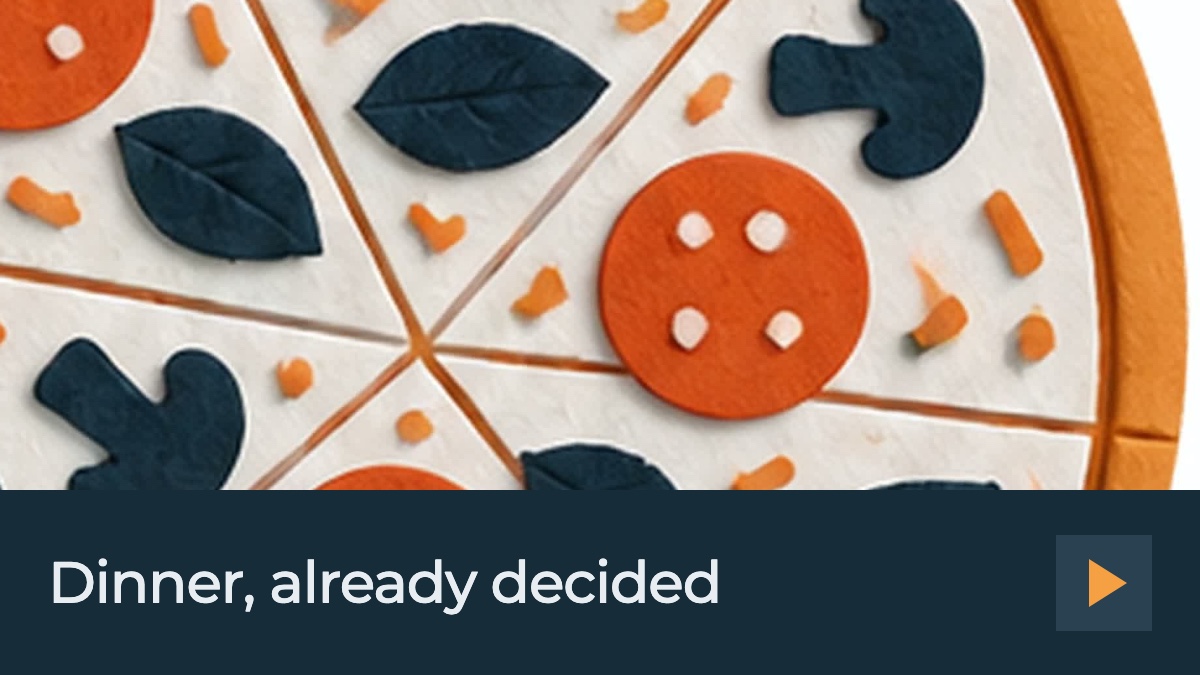
If you are interested in making dinners easier, get on the waitlist for my new course, Never decide dinner again. You set up an AI assistant that plans your dinners from recipes you already like and writes the shopping list every week. It's built for Claude and works in ChatGPT too. It opens before the end of the year, and the waitlist hears first and gets an early-bird discount. Here's a small teaser:
Calendar coordination and the loose ends both run through my AI chief of staff, and I'm building one live at a free webinar, Build an AI chief of staff with Claude, on Thursday, October 22, 10:00–11:00 CEST. I'll build the morning brief with you, the same kind that had the babysitter dates waiting for me, and show you the home jobs mine handles too. Register even if you can't make it live: the replay and the take-home materials go to every registrant.
What I'm learning from
The Overhang — Ethan Mollick / One Useful Thing. Mollick argues that today's AI models are already far more capable than what we're using them for. He calls this gap the overhang. Mollick always runs really interesting experiments with AI, and in this article he demonstrates the overhang by asking AI to deliver projects that would normally take humans weeks: rebuilding a classic text-adventure game in 3D and reconstructing Umberto Eco's library of tens of thousands of books. I've experienced this AI power myself: I was recently able to mock up the same game-inspired world with two different models in about half a day.
AI Pragmatism: The only way to growth (without the AI arms race) — Dr. David Watson / King's College London. This article has inspired me to call myself an AI pragmatist. Watson argues that when it comes to AI, we've been polarized into two camps: the techno-utopians who want more agents, more models, more AI, and the skeptics who refuse to engage at all. AI pragmatism is his solution: name a clear, concrete problem, decide how you'd measure success, then ask which outcomes are worth optimizing and which risks need guardrails. His example is loan applications, where faster decisions only count as progress if the bias in the data gets handled too.
Can AI Free Women from the Mental Load of Caregiving? — Marianne Cooper / Time. Cooper, a sociologist at Stanford, can see the potential of using AI at home: more convenience, better coordination and, in many cases, better care. She calls it a lifeline for families. But she is worried that our culture of raising standards instead of allowing rest for caregivers might undercut AI advances in the home. She settles on this warning: "If 'frictionless' family life becomes the norm, whatever downtime or peace of mind AI might give women will instead be consumed by datafication, mommymaxxing, and an endless quest for optimization." To complete the transformation, she says, we need a cultural shift too: men doing more at home, and women being allowed to do less.
Try this month
Ask for outcomes, not forecasts
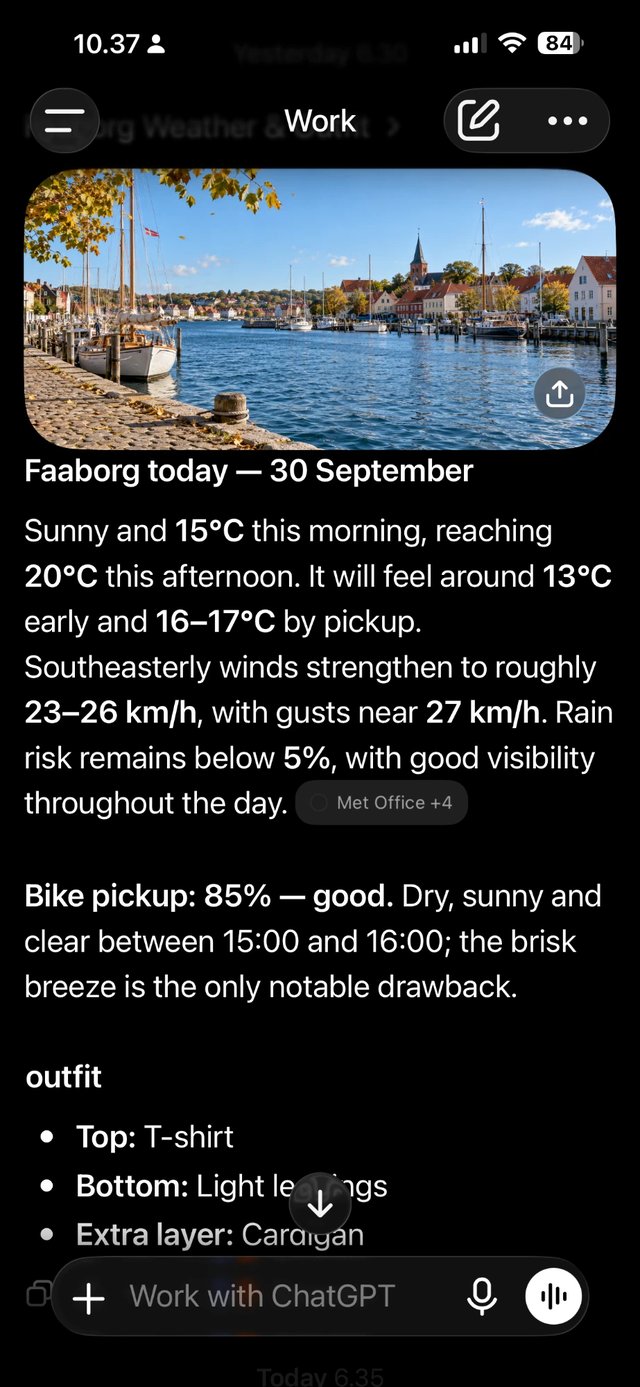
Every morning at 6:30, ChatGPT sends me a message that preps me for the daycare run. It's short, and it answers three questions:
- What are today's conditions, in one paragraph?
- How likely is it that I can do the 15:00 pickup by bike, as a percentage? (Yesterday: 85%, good.) If rain is likely, I know to coordinate the car with my husband before the day starts.
- What should my daughter wear, down to the light-leggings-or-medium-sweats level?
I used to study the hourly forecast while trying to convince my two-year-old that an outfit cannot consist of three different shirts. The difference now is that I told the AI the outcomes I need (will it be fun to bike at 3pm today, what does she wear) and it turns the forecast into those answers. "Give me the weather" got me data I had to sort through myself. Naming the decisions I have to make gets me answers.
Here's the exact prompt I started with:
Every morning I want you to check the weather in [city] and send it to me. Additionally, I want you to suggest what kind of clothes my daughter should wear. Don't worry about outer layers. She has all that at daycare. I'm thinking more along the lines of: t shirt/tank/long sleeve, shorts/pants. Also type of pants: light leggings, medium sweats, heavy sweats. Plus whether she needs a cardigan or sweatshirt as well.
Yours doesn't have to be my daycare brief. Ask for the outcomes that would start your day well:
- a motivational image to open the day on, if mornings are your hard part
- whether tonight has a dry window for a run or a walk
- pollen levels, and whether to take the antihistamine before you leave the house
- whether the garden needs watering or the sky will handle it
Copy/paste prompt
Every morning at [7:00], [check the weather in my town] and send me a short brief. I want answers to these questions:

- [Can I bike to daycare pickup between 15:00 and 16:00? Give me a percentage.]
- [What should my daughter wear? Pick from: t-shirt, tank, or long sleeve; light leggings, medium sweats, or heavy sweats; cardigan or sweatshirt on top.]
- [Add your own, one decision per line.]

Start with an image: [atmospheric image reflecting the day's weather.]
Slow note
This newsletter has been a bit difficult to write because I've been fighting a very stubborn bout of the flu. Slowly but surely, fueled by a great deal of tea with honey, I got it to a place where I feel good about sending it. At one point my AI chief of staff offered to write the whole thing for me so I could go rest. I politely declined. Not everything has to be optimized. Not everything has to be AI.
A few ways to learn with me
- Join my free webinar →
Watch me build an AI chief of staff with Claude. Thursday, October 22 at 10:00 CEST. - Build something at your own pace →
An AI meal planner. Never decide dinner again is coming soon.