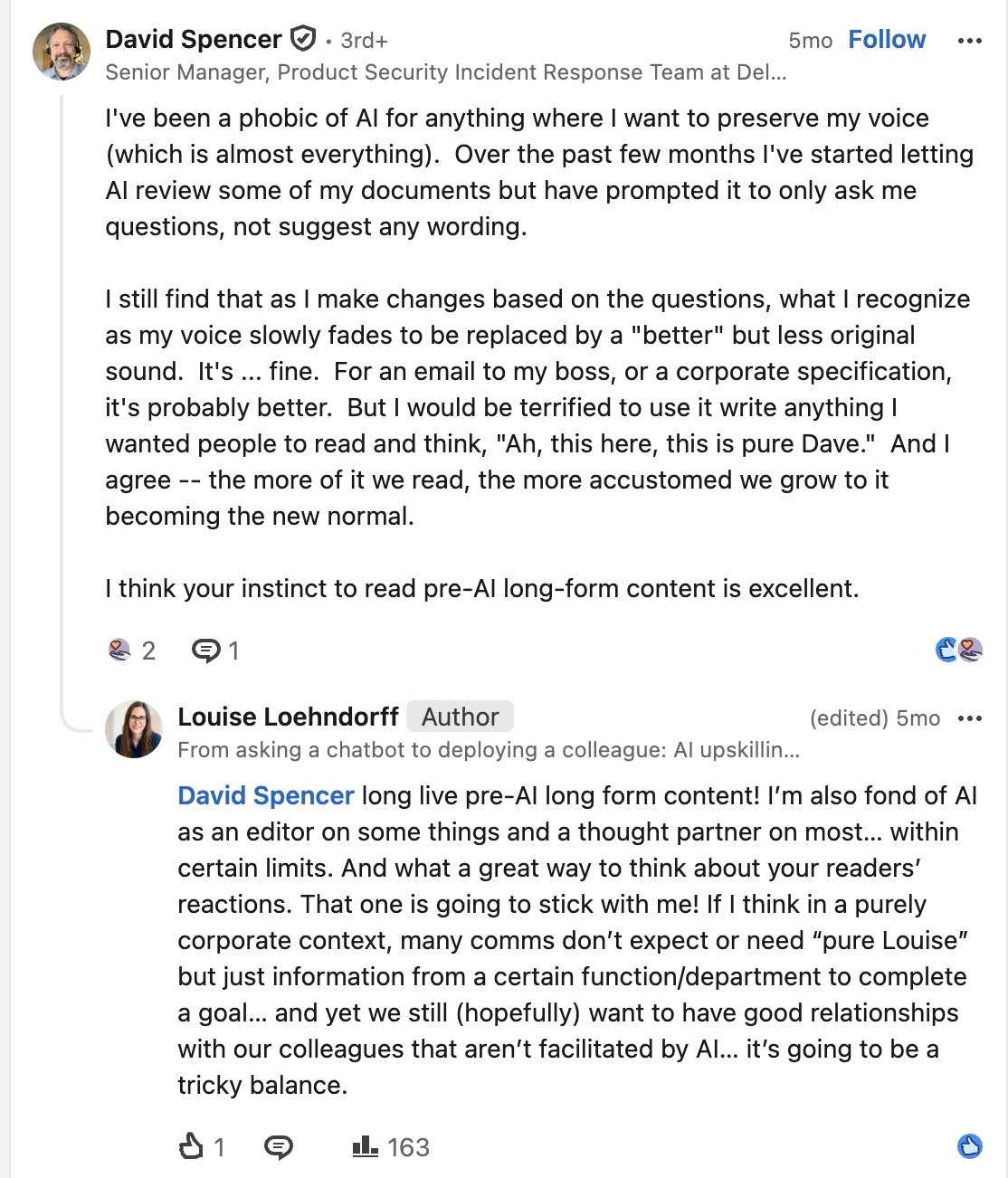
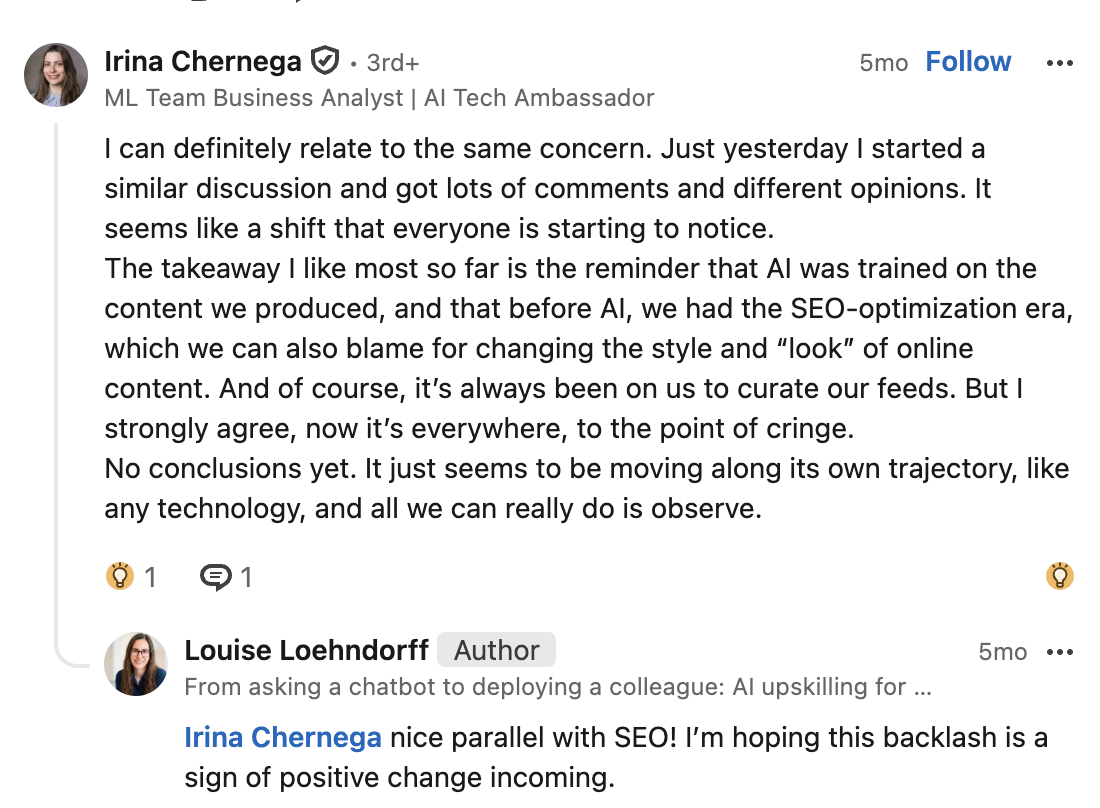
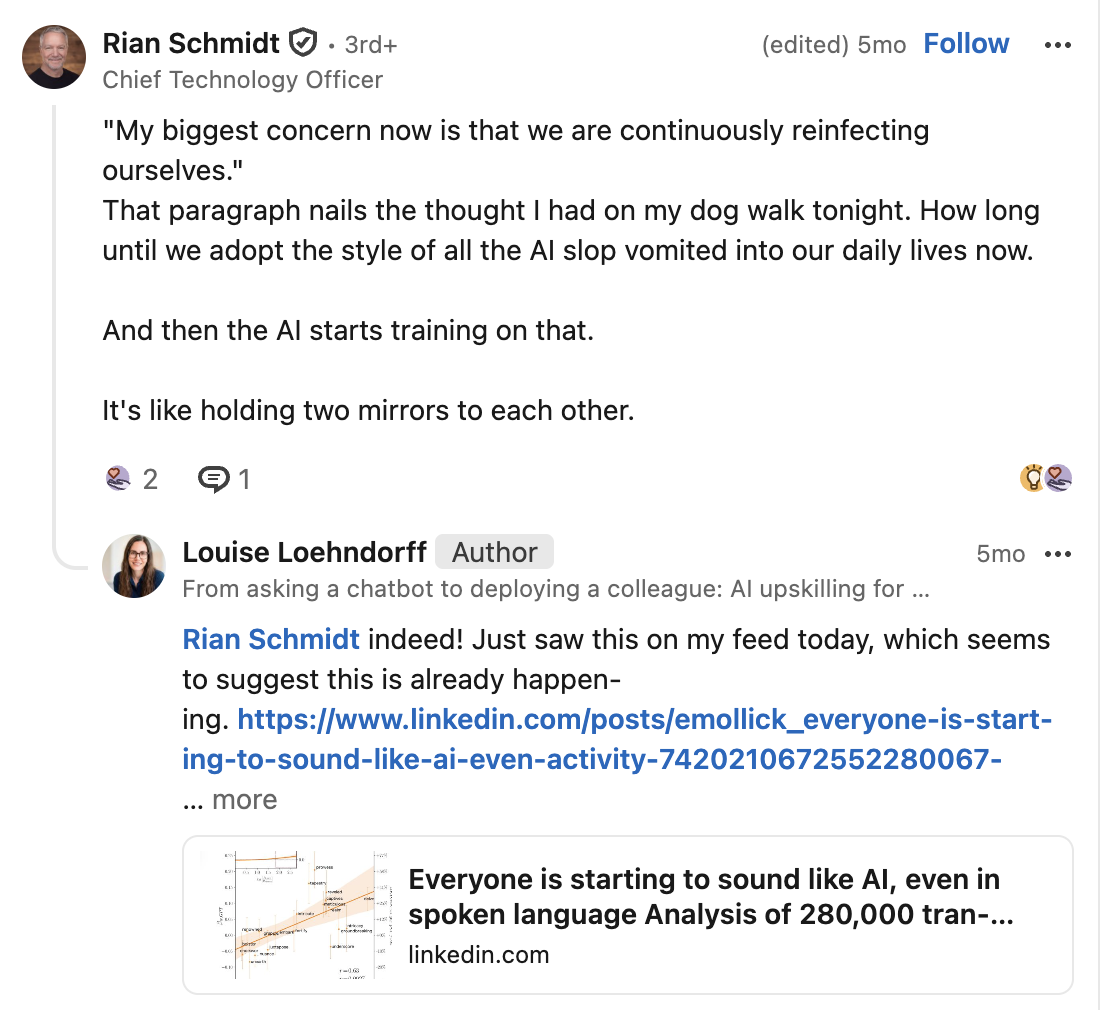
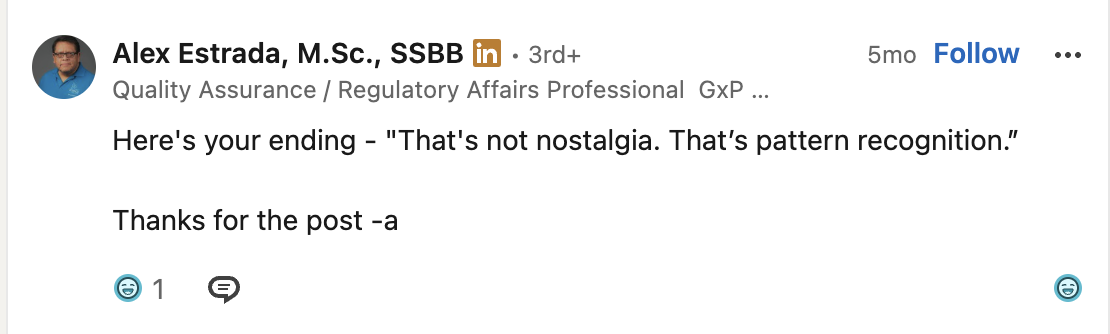
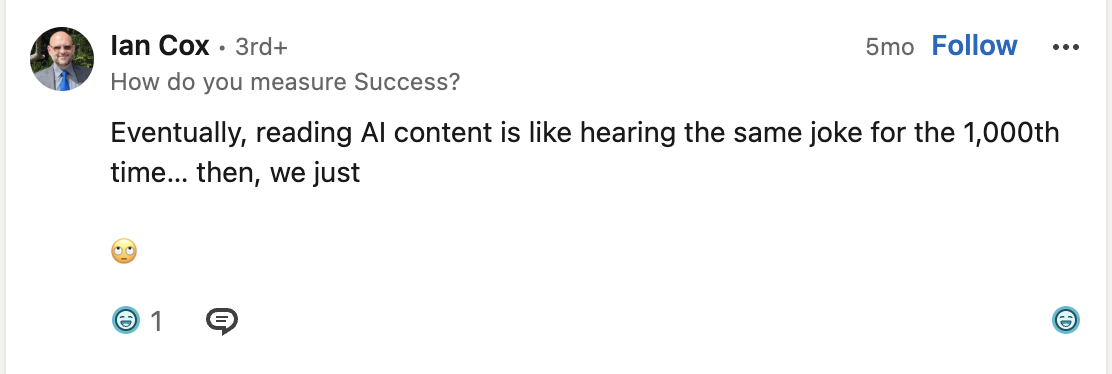
This piece is adapted from a post I first shared on LinkedIn, back in January 2026. It struck a nerve — here's one of my favorite replies:
Recently I was watching an old (old as in, pre-ChatGPT) TV show and one of the characters started a line with "But here's the thing...". The first thought that popped in my mind was that this was written by AI. Unlikely. This show aired in September 2022. But it still concerned me that I had that thought.
And then I opened LinkedIn to write this post and saw two posts in a row that started the exact same way... "Vibe coding is not X, it's Y."
I know I'm far from the only one who is remarking on this these days. I get tired when seeing endless LinkedIn posts, emails, and newsletters with the same formulas. "Here's the thing"... "It's not X, it's Y"... you, dear reader, I'm sure you know the rest of the tropes.
These formulas were invented by us and now they are being magnified and mass produced. I really don't like the term "AI slop" and I think this will be the first and last time I use it. It's not all slop. I have no doubt that behind many of the formulaic AI-generated or AI-assisted posts there are deep thoughts and original ideas. But the formula of ideas + AI is not adding up. As Henrik Werdelin and Nicholas Thorne found out when they tried to use AI as a ghostwriter in Me, My Customer & AI, "two and two consistently came back as 1.5".
At the moment it's mostly just leaving me feeling a bit of good old-fashioned woe. I know the power that AI augmentation can have: increased productivity, higher quality outcomes, and more joy in your workday. And I do think there is a time and place for AI-generated content. If I want a fast answer to something, for example, I don't care if I'm getting AI-generated content as long as it gives me what I need. I also personally use AI as a copy-editor to great effect.
My biggest concern now is that we are continuously reinfecting ourselves. The more AI-written content we consume, the more we will naturally start to adapt its style, even without the help of AI. I can feel it in myself sometimes, and I'm doing my best to inoculate myself. One thing I'm focusing on is consuming as much high-quality, pre-AI content as I can.
There's a longer version of this argument — the one where my old life as a classicist comes in. I'm giving it as a talk in Cologne next week, and I'll share the paper here after. It's also the backbone of the writing workshop: working out which parts of writing are yours to keep, and handing the rest to AI.
For now, go read something. Preferably something old.
Some more of the interesting comments this post sparked on LinkedIn: